
By Lee Garvey
When a compliance notice fails to reach its intended recipient — or fails to produce a verifiable record that it did — the consequences can be serious. Regulatory penalties, legal disputes, and failed enforcement actions often trace back not to the content of the notice but to how it was sent. Getting compliance mail right is less about the writing and more about the process.
Launch 500 postcards / flyers / letters in ~5 minutes. We print, address, and mail for you.
Upload your design and mailing list, pay, done.
No post office run. No subscriptions.
Next-business-day mailing for most products.
Why Physical Mail Is Still the Standard for Compliance Notices
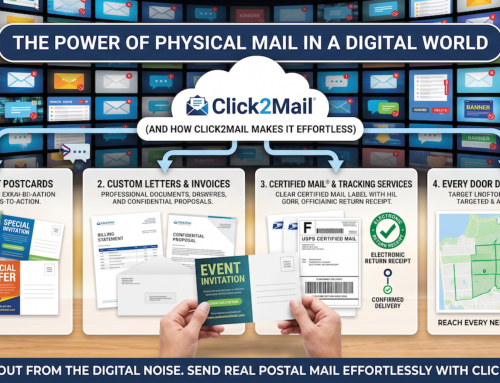
Digital communication has replaced physical mail in most business contexts, but compliance notices are a notable exception. Regulators, courts, and legal frameworks across industries — healthcare, property management, finance, employment law — continue to treat physical mail, particularly Certified Mail, as the standard for official notice delivery.
The reason is straightforward: physical mail produces a verifiable, timestamped record of delivery that email cannot reliably replicate. A Certified Mail receipt, combined with a signed Return Receipt, establishes that a specific party received a specific document on a specific date. That record holds up in court, in regulatory proceedings, and in contract disputes in a way that an email timestamp does not.
The USPS outlines the official standards for Certified Mail delivery and what constitutes valid proof of receipt under its guidelines.
Choose the Right Mail Class for the Notice Type
Not every compliance notice requires the same level of documentation. Matching the mail class to the specific requirement is an important first step.
First Class Mail
Appropriate for routine regulatory communications where delivery confirmation is helpful but a signature is not legally required. First Class Mail is forwarded if the recipient has moved, and undeliverable pieces are returned to the sender — both useful features for maintaining accurate contact records.
Certified Mail
The standard for notices where proof of delivery is legally significant. Every Certified Mail piece requires a recipient signature and generates an official USPS delivery record. Use Certified Mail for:
- Lease terminations and eviction notices
- Debt collection notices under FDCPA requirements
- Legal demand letters
- Insurance policy cancellations
- Employment termination notices
- Regulatory violation notices
Certified Mail with Return Receipt
Adds a physical or electronic copy of the recipient’s signature to your records. This is the highest standard of documented delivery available through standard USPS mail services and is often specifically required by statute or regulation. You can read more about when Return Receipt is the right choice and how it differs from basic Certified Mail.
Priority Mail
For time-sensitive notices where speed matters and tracking is needed, but a signature is not required. Priority Mail includes electronic tracking and typically delivers in one to three days.
Maintain a Clear Paper Trail
The documentation surrounding a compliance notice matters as much as the notice itself. Best practice is to maintain records that establish:
- What was sent — a copy of the exact document mailed, including version and date
- When it was sent — the mailing date, ideally supported by a proof of mailing such as a USPS Certificate of Mailing
- To whom it was sent — the full name and address of the recipient as it appeared on the envelope
- Whether it was delivered — tracking data, delivery confirmation, or a signed Return Receipt
When mail is sent through a platform like Click2Mail, this documentation is generated automatically. Every piece sent via Certified Mail online includes a tracking number, scan history, and optional electronic Return Receipt — all accessible from your account without having to file paperwork at a post office window.
Address Accuracy Is Non-Negotiable
A compliance notice sent to an outdated or incomplete address is a notice that may not count as legally served — regardless of what the content says. Address validation should be a standard step in your compliance mailing workflow, not an afterthought.
Key address issues that create compliance risk include:
- Missing apartment or unit numbers, which the USPS may not be able to deliver to
- Addresses that have changed due to a move without a forwarding order on file
- Addresses that have never existed or have been retired from the postal system
Click2Mail applies automatic CASS and NCOA address cleansing to every mailing, flagging nonstandard addresses before a piece goes out. The USPS also provides address quality resources for businesses managing compliance-sensitive mailing lists.
For high-stakes compliance situations, it is worth going one step further and verifying the recipient’s current address independently before mailing, particularly if there is any reason to believe the address on file may be outdated.
Timing and Deadlines
Many compliance frameworks specify not just how a notice must be sent but when. Regulatory deadlines, notice periods, and cure windows are often calculated from the date of mailing, not the date of delivery — but this varies by jurisdiction and by the specific regulation involved.
Practical steps to protect yourself on timing:
- Send notices well in advance of any deadline, accounting for potential delivery delays
- Use next-day production options when timing is tight — Click2Mail offers same-day or next-business-day mailing for most products
- Check the current USPS service standards for realistic delivery windows in your region, particularly if recent postal service changes have affected transit times in your area
- Keep the USPS tracking record as evidence of the mailing date in addition to any internal records
HIPAA and Sensitive Information
For healthcare organizations, compliance mail often involves Protected Health Information (PHI), which triggers HIPAA obligations that extend all the way down the mailing supply chain. Every vendor that touches the document — including the print and mail provider — must be HIPAA compliant and operate under a Business Associate Agreement (BAA).
Click2Mail maintains HIPAA-compliant mailing protocols, including segregated mail streams for PHI, staff training requirements, and contractual compliance obligations with all downstream vendors. This means healthcare organizations can send compliance notices — explanation of benefits letters, coverage change notifications, regulatory disclosures — through Click2Mail without creating a HIPAA exposure in their mailing workflow.
Streamline Compliance Mailing Without Sacrificing Documentation
The administrative burden of compliance mailing is one reason organizations sometimes cut corners — using regular first class mail when Certified Mail is required, or skipping address verification to save time. Outsourcing compliance mail to a platform built for it removes that temptation by making the right process just as easy as the wrong one.
With Click2Mail, sending a Certified Mail notice with a full audit trail takes no more effort than sending a standard letter. Visit Click2Mail.com to set up your compliance mailing workflow and make sure every notice you send is documented, delivered, and defensible.

About Lee
Lee Garvey is the founder of Click2Mail, a pioneering platform in cloud-based direct mail automation since 2003. Under his leadership, Click2Mail has become a trusted USPS partner, helping thousands of businesses streamline their mailing processes and effectively bridge the gap between digital and physical marketing.