
Direct Mail Analytics: Turning Data into Direct Response

By Lee Garvey

Your postcard just landed in 5,000 mailboxes. Now what? While many marketers simply cross their fingers and wait for responses, industry leaders know that modern direct mail success depends on what happens after your campaign launches.

“It’s really simple what you need to track, and that’s whether people are responding to the offer with purchases or calls or whatever you want them to do,” explains Carly Brown, customer support manager at Click2Mail.

This mindset represents a fundamental shift in direct mail strategy. Today’s most successful campaigns don’t end when the mail goes out—they begin a sophisticated tracking and analysis process that transforms traditional marketing into a data-driven science. Let’s explore how you can implement these advanced approaches in your own campaigns.

From your desk — in minutes

Launch 500 postcards / flyers / letters in ~5 minutes. We print, address, and mail for you.

Upload your design and mailing list, pay, done.
No post office run. No subscriptions.
Next-business-day mailing for most products.

Create your free account No minimums. Use any email to get started.

Beyond Basic Metrics: The New Analytics Landscape

Traditional direct mail relied on simple metrics: pieces mailed, responses received, and basic ROI calculations. While these fundamentals remain important, today’s analytics capabilities offer much deeper insights that can dramatically improve your results.

Modern direct mail analytics connects offline mailings with online behavior through several powerful techniques.

QR Codes: Instant Digital Connections

QR codes create an immediate bridge between physical mail and digital tracking systems.

“QR codes are good because you can better count the clicks and see how many people have followed through on a call to action,” Carly notes.

These simple squares transform a static mailpiece into an interactive experience while providing valuable tracking data about when, where, and how recipients engaged with your message.

Personalized URLs: Individual-Level Tracking

Personalized URLs (PURLs) take tracking precision to the next level by creating unique web addresses for each recipient.

Lee Garvey, founder and CEO of Click2Mail, highlights their analytical power: “The nice thing about personalized URLs is that we can track not just that someone responded, but exactly who responded. This lets you build a much clearer picture of which segments of your audience are most engaged.”

This individual-level data enables you to:

  • Track specific recipient behavior
  • Measure engagement across different segments
  • Create personalized follow-up campaigns
  • Calculate precise ROI by audience type

Phone Tracking: Capturing Voice Responses

Not all responses happen online. Many customers—especially in certain demographics—prefer speaking with a real person before making decisions. Dedicated phone numbers or extensions create a critical tracking pathway for these voice-based conversions.

Modern call tracking systems can:

  • Link unique phone numbers to specific mail pieces or campaigns
  • Record call duration and conversion rates
  • Capture geographic data about callers
  • Track peak response times and days
  • Integrate with CRM systems for seamless follow-up
  • Monitor call quality and staff performance

This data helps determine which mail pieces drive phone responses, which scripts convert most effectively, and which customer segments prefer voice interaction—insights that digital-only tracking would completely miss.

Ensuring Analytics Accuracy

Even the most sophisticated tracking tools are only effective when properly implemented and maintained. Quality control is essential for reliable analytics.

Before launching any campaign, verify these key components:

  • QR Code Functionality – Ensure all codes scan properly and direct to the correct destinations
  • Phone Number Routing – Confirm call tracking systems are properly configured
  • Web Analytics Integration – Check that digital tracking is capturing all relevant data points
  • Response Attribution – Test all systems that connect responses back to specific campaigns

Be careful of a few potential missteps as well.

“There’s a big problem if there’s a disconnect between who sent the piece and who answers the phone and takes the orders,” Carly says. “And if you’ve used one of those paid QR code services where your QR code is deleted after a while, that’s a potential issue. You want to test your QR codes too – hold your phone up to your computer and scan that thing.”

Turning Data into Action

Collecting data is only the beginning. The real value comes from analysis and application of these insights to improve future campaigns.

Segment-Level Analysis

With proper tracking in place, you can analyze performance across different audience segments to identify your most responsive groups.

“With personalization and proper tracking, you can drill down into demographics with the technology we have access to,” says Lee Garvey, founder and CEO of Click2Mail. “You can get very granular about understanding who’s responding to your campaigns.”

This granular understanding allows you to:

  • Refine target audiences based on actual response data
  • Adjust messaging for different demographic groups
  • Optimize offers based on segment preferences
  • Reallocate budget toward highest-performing segments

Early Engagement Indicators

Analytics can reveal valuable information about prospects even before they make a purchase or final conversion.

“If someone looked at your website once, they’re interested, so they’re a good candidate to remail to,” Carly points out.

These early engagement signals help you identify promising prospects for follow-up campaigns, potentially increasing your overall conversion rate while decreasing acquisition costs.

Practical Implementation Steps

Ready to enhance your direct mail analytics? Follow these steps to get started:

1. Audit Current Tracking Capabilities

Begin by assessing your existing tracking methods. Identify gaps in your ability to measure:

  • Who is responding
  • Which channels they’re using
  • How different segments perform
  • What happens after initial engagement

2. Implement Basic Digital Connectors

Start with these fundamental tracking tools:

3. Develop Systematic Testing Protocols

Create a structured approach to testing campaign elements:

  • A/B test different offers, designs, or messages
  • Compare response rates across segments
  • Measure channel preferences by audience type
  • Track timing patterns in responses

4. Build Analysis into Campaign Planning

Make analytics an integral part of your campaign development process:

  • Review previous campaign data before planning new ones
  • Set specific measurement goals for each campaign
  • Schedule analysis points throughout the campaign lifecycle
  • Use insights to adjust ongoing campaigns in real-time

Boost Your Direct Mail Results With Click2Mail’s Analytics Solutions

Don’t send another campaign without knowing exactly who’s responding and why. Click2Mail’s integrated tracking solutions make it easy to implement sophisticated analytics without massive technical investment or minimum volume requirements.

Our platform handles everything from QR code generation to response attribution, helping you gather valuable insights from your very first mailing. Visit Click2Mail.com today or call 866-665-2787 to discover how our analytics tools can help you achieve better results while saving time and money on every campaign you send.

Lee Garvey

About Lee

Lee Garvey is the founder of Click2Mail, a pioneering platform in cloud-based direct mail automation since 2003. Under his leadership, Click2Mail has become a trusted USPS partner, helping thousands of businesses streamline their mailing processes and effectively bridge the gap between digital and physical marketing.

Click2mail Team2025-11-03T20:06:06-05:0002/06/2025|Uncategorized|

Direct Mail for Non-Profits: Cutting Through the Digital Noise

By Lee Garvey

The average American receives 121 emails per day but only a fraction of that in terms of physical mail. In this stark contrast lies an opportunity that savvy non-profit organizations are rediscovering: the power of direct mail to break through the clutter when digital channels are oversaturated.

“People will not open an email from a new organization they don’t know, but they will look at a direct mail piece,” explains Lee Garvey, founder and CEO of Click2Mail. “That’s why direct mail can be so effective for reaching new supporters.”

This physical advantage is just the beginning of what makes direct mail a secret weapon in modern fundraising campaigns. Let’s explore how your non-profit can leverage this channel to maximize donations while keeping costs under control.

From your desk — in minutes

Launch 500 postcards / flyers / letters in ~5 minutes. We print, address, and mail for you.

Upload your design and mailing list, pay, done.
No post office run. No subscriptions.
Next-business-day mailing for most products.

Create your free account No minimums. Use any email to get started.

Why Direct Mail Still Matters in a Digital World

Despite the digital revolution, direct mail remains one of the most effective fundraising tools in a non-profit’s arsenal. According to recent research, the average direct mail response rate is 9% compared to email click-through rates that are a tiny fraction of that. These numbers tell a compelling story about attention and engagement.

The Power of Tangibility

What makes direct mail so effective? Consider these advantages:

  1. Personal connection – Physical mail feels like a personal message rather than another work email
  2. Tangible reminder – A letter can sit on a kitchen counter, serving as a persistent reminder
  3. Preference across generations – Contrary to popular belief, even Gen Z consumers report increasing excitement about receiving mail
  4. Superior storytelling medium – Donors report that direct mail is better at conveying touching stories and important facts

Mastering Direct Mail Best Practices

To maximize your direct mail effectiveness, focus on these proven strategies:

Know Your Audience

The foundation of any successful direct mail campaign is understanding who you’re writing to. Start by distinguishing between two fundamental audience types:

  • Current donors – Previous supporters familiar with your organization
  • Prospect lists – Potential new donors who haven’t yet engaged with your cause

Segmenting your audience allows for personalization, which studies show can increase fundraising revenue. When you include a recipient’s name along with other personalized information, response rates can jump even higher.

Harness the Power of Storytelling

Direct mail provides the perfect canvas for compelling storytelling that resonates with donors. The most effective fundraising stories incorporate three essential elements.

1. Resonance: Details that bring stories to life

  • Use specific, truthful details from real beneficiaries
  • Gather more information than needed to create authentic narratives
  • Focus on human elements that create emotional connections

2. Relevance: Connecting donors to the narrative

  • Use “you” language to place the donor in the story
  • Emphasize how donations create tangible change
  • Position the donor as the hero in your mission’s story

3. Respect: Maintaining donor trust

  • Avoid manipulative tactics or false urgency
  • Present needs honestly without exaggeration
  • Treat donors as partners rather than targets

Integrate Visuals with Copy

Effective direct mail appeals don’t rely on words alone. Strategic visuals can dramatically increase engagement and response rates:

  • Compelling photographs that make empathy easier
  • Clean, appealing layouts that guide the eye through your message
  • Graphics that reinforce key points without overwhelming the text
  • QR codes that bridge physical mail with digital engagement

Measure Results and Optimize

Every direct mail campaign offers valuable data to improve future efforts. Track key metrics including:

  • Response rates by segment
  • Average gift amounts
  • Cost per donor acquired
  • Long-term donor value
  • Return on investment (ROI)

“Even changing something as simple as the color of your response envelope can impact results,” Lee says. “The organizations that consistently test outperform those that don’t.”

Creating a Multi-Channel Approach

While direct mail stands strong on its own, it performs even better when integrated with other communication channels. A comprehensive approach might include:

  • Email follow-ups that reference the mailed piece
  • Social media reinforcement of key campaign messages
  • Website landing pages specifically designed for direct mail respondents
  • Phone calls to high-value prospects after mail delivery

The Follow-Up: Critical for Relationship Building

Don’t overlook the importance of following up after a donation. Thank-you notes should be:

  • Authentic – Express genuine gratitude from a real person
  • Personal – Reference specific details about the donor
  • Impact-focused – Show exactly how their gift is being used
  • Timely – Sent promptly after receiving the donation

This follow-up communication plays a crucial role in converting one-time donors into loyal, recurring supporters.

Ready to Save Time and Money on Your Next Direct Mail Campaign?

Non-profits typically spend many hours per week managing direct mail campaigns and pay premium rates for small-batch mailings. Click2Mail eliminates these burdens with:

  • Zero subscription fees – only pay for what you mail
  • Non profit postage rates – available on-demand to USPS authorized organizations 
  • No minimum volume requirements – perfect for targeted campaigns
  • Next-day mailing for most products – respond quickly to emerging needs
  • User-friendly online platform – no special training required
  • Professional design templates – look polished without a graphic designer

Don’t let high costs and administrative headaches keep you from reaching donors effectively. Visit Click2Mail.com today or call 866-665-2787 to discover how our non-profit direct mail solutions can maximize your fundraising impact while minimizing your expenses.

Lee Garvey

About Lee

Lee Garvey is the founder of Click2Mail, a pioneering platform in cloud-based direct mail automation since 2003. Under his leadership, Click2Mail has become a trusted USPS partner, helping thousands of businesses streamline their mailing processes and effectively bridge the gap between digital and physical marketing.

Click2mail Team2025-11-03T20:07:56-05:0002/03/2025|Direct Mail, Tips & Tricks|

Direct Mail Copywriting: The Psychology Behind Successful Campaigns

By Lee Garvey

In a world of “delete” buttons and spam folders, a well-crafted piece of direct mail offers something increasingly rare: undivided attention.

For a few precious moments, your message stands alone in your recipient’s hands. No competing ads. No distractions. Just your words and their attention.

But those moments are fleeting.

“For a postcard, you’ve got a 100% open rate, but you really only have a couple of seconds to grab their attention,” says Carly Brown, customer support manager at Click2Mail. “The winning postcards have one headline that is really well-written, then supporting text.”

This guide explores the psychological principles that make direct mail copy effective and provides practical techniques to create messaging that converts those brief moments of attention into customer action.

From your desk — in minutes

Launch 500 postcards / flyers / letters in ~5 minutes. We print, address, and mail for you.

Upload your design and mailing list, pay, done.
No post office run. No subscriptions.
Next-business-day mailing for most products.

Create your free account No minimums. Use any email to get started.

The One-Message Rule: Focus Creates Impact

The most common copywriting mistake is trying to say too much. Nearly every direct mail expert emphasizes the importance of singular focus.

“One postcard, one message: if you try to tell someone everything about what you do on a postcard, you will fail,” Carly explains. “Your card needs to be readable – someone should be able to glance at it and understand the headline.”

This principle is echoed by Lee Garvey, founder and CEO of Click2Mail: “There are two big mistakes people make with copy. First, trying to stuff everything in – information overload. Second, not giving people an immediate and effective way to respond.”

How to Implement the One-Message Rule

  • Identify your single most important point – what one thing do you want recipients to remember?
  • Eliminate everything that doesn’t support this main message
  • Use a clear headline that communicates your core point instantly
  • Support with brief, scannable text
  • Include one clear call to action

Tip: Before finalizing your copy, ask someone unfamiliar with your business to glance at your mail piece for 3 seconds. Then have them tell you what it’s about. If they can’t articulate your main point, simplify further.

Psychology of Offer Presentation

The way you present your offer dramatically affects response rates. Psychological research shows that perceived value often matters more than actual cost.

“The word ‘free’ tends to motivate people a lot and makes the offer feel like it has value,” Carly notes. “The offers that equate to actual money do really well, but it doesn’t have to be something that costs money. It could be a free consultation or estimate.”

Elements of Compelling Offers

  • Highlight immediate benefits rather than long-term features
  • Specify monetary value whenever possible (e.g., “A $250 value – yours free”)
  • Create urgency with time-limited elements
  • Reduce perceived risk with guarantees or free trials
  • Use specific numbers rather than generalizations
  • Include social proof that validates your claims

The Visual Psychology of Copy

While the words you choose matter tremendously, how those words appear visually can be equally important. Conventional wisdom favors clean, professional designs, but testing reveals surprises.

“Interestingly, sometimes an ugly font helps because readers will look at it like ‘what the heck?’ – it creates a speedbump,” Carly says. “We have real estate investors who mail postcards where every single line on the postcard has text wall to wall. Those cards have been proven to work in the real estate investment industry.”

This doesn’t mean you should intentionally create unattractive materials, but it does suggest the value of testing unconventional approaches against more traditional designs.

“If you’re going to try something unconventional like that, you have to do A/B testing against something clear and concise,” Carly advises.

Key Visual Elements to Consider

  • Font selection – readability vs. attention-grabbing uniqueness
  • Text density – white space vs. information density
  • Visual hierarchy – guiding the eye through your message
  • Color psychology – how color influences emotional response
  • Contrast – ensuring important elements stand out

Industry-Specific Applications

Different industries benefit from highlighting specific elements in their copy. Here are some examples.

Real Estate

When crafting real estate mailings, certain metrics consistently drive better results.

“When you’re writing a ‘Just Sold’ postcard, there are two key elements to focus on: the selling price versus the asking price, and the time it took to sell,” Lee notes. “If you can sell something in 2 days, you’re going to be bragging about that.”

Effective real estate copy highlights:

  • Speed of transactions
  • Sale price versus asking price
  • Local market knowledge
  • Properties similar to the recipient’s

Financial Services

Financial services mailings typically benefit from copy that builds trust through:

  • Stability metrics (years in business, size of portfolio)
  • Security emphasis (insurance, guarantees)
  • Credential highlights (certifications, awards)
  • Client success stories with specific numbers

Retail and Local Businesses

Local business mailings perform best when they focus on:

  • Proximity and convenience
  • Community connection
  • Exclusive local offers
  • Immediate availability

Direct Mail Response Mechanisms: Making Action Easy

Even the most compelling copy fails if recipients don’t know how to respond. The second major mistake Lee identifies is “not giving people an immediate and effective way to respond. People want to put every feature and benefit but forget to include a phone number or email address.”

Best Practices for Response Mechanisms:

  • Provide multiple response options (phone, web, in-person)
  • Make contact information highly visible
  • Use QR codes for easy digital transition
  • Include clear instructions (“Call today” vs. vague “Contact us”)
  • Remove barriers to immediate action
  • Create tracking mechanisms for each response channel

Testing and Optimization

The most successful direct mail marketers continuously test and refine their copy. Here’s a structured approach:

  1. Start with a control piece – your current best-performing copy
  2. Test one element at a time – headline, offer, call-to-action, etc.
  3. Use split testing with identical audiences
  4. Measure both response rate and conversion quality
  5. Document all variables for future reference
  6. Implement winning changes and begin testing the next element

Tip: Even small copy changes can yield significant results. Come up with a few ideas and A/B test each of them.

Common Copywriting Pitfalls to Avoid

Beyond the two major mistakes Lee identified, watch out for these common errors:

  • Industry jargon that alienates readers
  • Focusing on features instead of benefits
  • Buried call-to-action
  • Inconsistent tone or messaging
  • Making claims without evidence
  • Missing personalization opportunities

Transform Your Direct Mail Results

Effective direct mail copywriting isn’t about clever wordplay or marketing tricks—it’s about clear communication that respects the psychology of how people receive and process information.

By focusing on a single message, presenting offers compellingly, testing different approaches, and making response easy, you can dramatically improve the performance of your direct mail campaigns.

Click2Mail’s platform makes it easy to implement these psychological principles with easy-to-use templates, flexible design options, and affordable testing capabilities. Whether you’re sending a one-time mailing or managing an ongoing campaign, you can start applying these principles immediately.

Visit Click2Mail.com today to explore our direct mail solutions and see how the right copy can transform your marketing results.

Lee Garvey

About Lee

Lee Garvey is the founder of Click2Mail, a pioneering platform in cloud-based direct mail automation since 2003. Under his leadership, Click2Mail has become a trusted USPS partner, helping thousands of businesses streamline their mailing processes and effectively bridge the gap between digital and physical marketing.

Click2mail Team2025-11-03T20:09:41-05:0001/30/2025|Direct Mail, Tips & Tricks|

Multi-Channel Marketing: How to Integrate Direct Mail with Digital Campaigns

By Lee Garvey

Your customers don’t live in a single channel—so why would your marketing?

While your competitors battle for attention in crowded digital spaces, smart marketers are discovering a powerful truth: combining the physical impact of direct mail with the convenience of digital creates an experience that neither channel can achieve alone.

“We’re seeing that direct mail actually complements digital channels really well, especially for new customer acquisition,” explains Lee Garvey, founder and CEO of Click2Mail. “People won’t open an email from a new company—they’ll mark it as spam. But they will look at a piece of direct mail, and that can be your entry point to start a digital relationship.”

This guide explores practical strategies for bridging your physical and digital marketing efforts to create seamless customer experiences that drive better results.

From your desk — in minutes

Launch 500 postcards / flyers / letters in ~5 minutes. We print, address, and mail for you.

Upload your design and mailing list, pay, done.
No post office run. No subscriptions.
Next-business-day mailing for most products.

Create your free account No minimums. Use any email to get started.

Why Integrate Direct Mail with Digital?

Combining direct mail with digital channels isn’t just a nice idea—it delivers measurable advantages:

  • Higher response rates: Multi-channel campaigns typically outperform single-channel approaches by 35% or more
  • Extended engagement: Physical mail initiates awareness while digital continues the conversation
  • Better tracking: Integration tools provide end-to-end visibility of the customer journey
  • Increased trust: Physical mail establishes credibility that enhances digital interactions
  • Improved ROI: Strategic channel integration optimizes your marketing spend

Key Integration Technologies in Direct Mail

The real magic happens when you connect physical mail to digital experiences. Two technologies stand out as particularly effective bridges: QR codes and personalized URLs (PURLs).

QR Codes: The Physical-Digital Gateway

QR codes have evolved from marketing novelty to essential tool. They provide an instant connection between your mailpiece and your digital content—whether that’s a website, video, app, or contact form.

“QR codes and personalized URLs have become key tools for bridging print and digital,” Lee says. “They’ve evolved from something we had to explain to customers back in 2010 to becoming an expected feature of modern direct mail campaigns.”

When used strategically, QR codes can transform even challenging communications into positive customer experiences.

“One of our most successful examples of digital integration was a utility company that used QR codes in their rate change notices,” shares Carly Brown, customer support manager at Click2Mail. “When customers scanned the code, they got a personalized video explaining exactly why their bill was changing. It made a potentially negative message much more digestible.”

Tip: Always include a brief instruction with your QR code (like “Scan for exclusive video”) so recipients understand the value of taking action.

Personalized URLs (PURLs): Custom Digital Destinations

PURLs create unique web addresses for each mail recipient (for example, yourcompany.com/john-smith). This personalization accomplishes two important goals:

  1. It makes recipients feel recognized, increasing response rates
  2. It enables precise tracking of individual engagement

“Personalized URLs are really powerful for tracking engagement,” explains Brown. “We can see who looked at your website after receiving mail, which helps identify interested prospects for follow-up. It’s a great way to connect offline efforts with online tracking.”

Tip: Keep PURLs simple and relevant to the recipient—using first and last names is typically most effective.

Implementation Strategy: Creating a Seamless Experience

Successful channel integration requires thoughtful planning. Here’s a step-by-step approach.

1. Map Your Customer Journey

Before designing your campaign, map out how customers will move between channels:

  • What’s the first touchpoint? (typically direct mail)
  • What action do you want them to take after receiving the mail?
  • What happens when they engage digitally?
  • How will you follow up based on their response (or lack thereof)?

2. Maintain Consistent Messaging

Your direct mail and digital content should feel like parts of the same conversation:

  • Use consistent visual branding across all channels
  • Align messaging and offers
  • Ensure the digital experience delivers on what was promised in the mail
  • Maintain the same tone and style throughout

3. Build Reliable Technical Connections

The bridge between physical and digital must be dependable:

  • Test QR codes and PURLs on multiple devices before mailing
  • Ensure landing pages are mobile-friendly
  • Keep load times under 3 seconds
  • Maintain active digital assets throughout your campaign

“With QR codes, you can better count the clicks and see how many people followed through on your call to action,” notes Carly. “Just make sure your QR codes stay active—we’ve seen campaigns fail when using paid QR services that expire after 90 days.”

Note: Click2Mail offers a free built-in QR code generator for direct mail campaigns.

4. Set Up Comprehensive Tracking

The real power of integration comes from the insights you gain:

  • Track which mail pieces generate digital engagement
  • Monitor how recipients navigate through your digital content
  • Measure conversion rates at each step of the journey
  • Analyze which combination of touchpoints drives the best results

Measuring Multi-Channel Success

The integration of direct mail and digital creates unique opportunities for comprehensive tracking. Focus on these key metrics:

  • Channel attribution: Which channel initiated engagement and which closed the sale?
  • Response timeline: How long after mail delivery did digital engagement occur?
  • Conversion path analysis: What sequence of interactions led to conversion?
  • Engagement depth: How far into your digital content did mail recipients go?
  • Cross-channel ROI: How did integrated campaigns perform versus single-channel efforts?

Best Practices for Seamless Integration

Based on Click2Mail’s experience with thousands of integrated campaigns, these practices consistently drive better results:

  1. Start with a compelling physical piece that stands out in the mailbox
  2. Make the digital transition frictionless with clear instructions and easy-to-use connection points
  3. Deliver immediate value when recipients make the jump to digital
  4. Personalize both physical and digital experiences whenever possible
  5. Test different integration approaches to find what works best for your audience
  6. Use digital engagement data to inform follow-up mailings

Ready to Bridge the Physical-Digital Divide?

Creating powerful multi-channel experiences doesn’t require a massive marketing budget or technical team. Click2Mail’s platform makes it easy to design, deploy, and track integrated campaigns that leverage the unique strengths of both direct mail and digital channels.

From QR code generation to personalized URL implementation and comprehensive tracking, we provide all the tools you need to create seamless customer journeys that start in the mailbox and continue online.

Visit Click2Mail.com today to explore our integration capabilities and start creating marketing experiences that follow your customers wherever they go.

Lee Garvey

About Lee

Lee Garvey is the founder of Click2Mail, a pioneering platform in cloud-based direct mail automation since 2003. Under his leadership, Click2Mail has become a trusted USPS partner, helping thousands of businesses streamline their mailing processes and effectively bridge the gap between digital and physical marketing.
Click2mail Team2025-11-03T20:11:43-05:0001/27/2025|Direct Mail, Tips & Tricks|

Targeting the Right Message: Direct Mail Strategies for Every Stage of the Customer Journey

By Lee Garvey

That postcard in your customer’s mailbox isn’t just a one-time message—it’s a strategic touchpoint in what could be a years-long relationship.

Smart marketers know that direct mail isn’t simply about blasting identical messages to everyone on your list. Instead, it’s about delivering the right message, in the right format, at the right stage of your customer’s journey.

“There are so many nuances when it comes to the lifecycle of a customer and what type of mail piece you need at what stage in that customer’s journey,” says Lee Garvey, founder and CEO of Click2Mail.

But what exactly does this customer journey look like, and how can you align your direct mail strategy with each stage? Let’s dive into the strategic considerations that can transform your direct mail from generic communications into powerful relationship-building tools.

From your desk — in minutes

Launch 500 postcards / flyers / letters in ~5 minutes. We print, address, and mail for you.

Upload your design and mailing list, pay, done.
No post office run. No subscriptions.
Next-business-day mailing for most products.

Create your free account No minimums. Use any email to get started.

The Customer Journey and Direct Mail: An Overview

The customer journey describes the complete experience a person has with your business, from their first awareness of your brand through purchase, usage, and hopefully, loyalty and advocacy.

While each business’s specific journey map may vary, most customer journeys follow these fundamental stages:

  1. Awareness: Prospects first learn your business exists
  2. Consideration: They evaluate whether your offering meets their needs
  3. Decision: They choose to make a purchase
  4. Retention: They continue doing business with you
  5. Advocacy: They become loyal fans who recommend you to others

Each stage requires a different approach, message, and sometimes even a different mail format to be effective. Let’s explore how to optimize your direct mail for each of these critical stages.

Mapping Direct Mail to Each Stage of the Customer Journey

Let’s go through each stage and talk about how you should approach it using direct mail.

1. Awareness Stage: Making That First Impression

At this initial stage, your goal is to introduce your brand memorably. Direct mail excels here because, as Lee notes, “People will not open an email from a new company, so direct mail is better for acquisition.”

Effective Formats:

  • Standard postcards (no envelope barrier)
  • Oversized postcards (greater visibility)
  • Simple self-mailers (more content space)

Key Messaging Approach: Focus on one clear benefit, strong visual branding, and a simple call to action. For example, a veterinary clinic successfully used this approach with a QR code on an EDDM (Every Door Direct Mail) piece for their open house, resulting in strong turnout. “People want to meet the groomer before they hand the dog over,” says Carly Brown, customer support manager at Click2Mail.

Tip: Keep it simple with one key message rather than explaining everything about your business.

2. Consideration Stage: Building Trust

As prospects evaluate options, provide more substantial information and build credibility. Integrate with other channels so they get a phone call at the same time they have mail in the mailbox.

Effective Formats:

  • Letter packages (detailed information)
  • Note cards (“These do gangbusters… they look fancy,” says Carly)
  • Slim-jim self-mailers (balanced information)

Key Messaging Approach: Address specific pain points, differentiate your offering, provide social proof, and clearly indicate next steps.

Tip: Use targeted personalization based on what you know about the prospect.

3. Decision Stage: Converting Interest

At this critical point, create urgency and remove purchase barriers with compelling offers.

Effective Formats:

  • Special offer postcards
  • Personalized letters
  • Dimensional mail (for high-value prospects)

Key Messaging Approach: Focus on compelling offers with deadlines and simplified purchase instructions. Sometimes something free (even if it’s inexpensive) outperforms direct discounts.

4. Retention Stage: Nurturing Relationships

For existing customers, build loyalty through recognition and relevant information.

Effective Formats:

  • Thank you cards (Lee recommends notecards in envelopes for greater impact)
  • Newsletters
  • Anniversary acknowledgments

Key Messaging Approach: Express appreciation first, then provide relevant information and complementary offerings.

5. Advocacy Stage: Creating Champions

Give satisfied customers tools to become advocates for your business.

Effective Formats:

  • Referral program cards
  • Branded shareable items
  • VIP event invitations

Key Messaging Approach: Make customers feel special, provide simple referral mechanisms, and reward loyalty.

Tip: Use QR codes to track referrals and identify engaged customers who are good candidates for remailing.

Ready to Align Your Direct Mail with Your Customer Journey?

Implementing a customer journey-based direct mail strategy doesn’t have to be complicated. Start by identifying which stage most of your current mailings target, then expand to adjacent stages for a more complete approach.

Click2Mail makes it easy to execute mail campaigns for every stage of the customer journey with a variety of formats, easy personalization options, and CRM integration capabilities that automate the right message at the right time.

Visit Click2Mail.com today to explore how our platform can help you deliver the perfect mail piece at every step of your customer’s journey—from first introduction to loyal advocacy.

Lee Garvey

About Lee

Lee Garvey is the founder of Click2Mail, a pioneering platform in cloud-based direct mail automation since 2003. Under his leadership, Click2Mail has become a trusted USPS partner, helping thousands of businesses streamline their mailing processes and effectively bridge the gap between digital and physical marketing.

Click2mail Team2025-11-03T20:13:24-05:0001/23/2025|Direct Mail, Tips & Tricks|

Demystifying the “En Route” IMb Scan: Your Mail’s Journey Revealed

By Lee Garvey

Have you ever dropped a letter at the post office and wondered about its journey to the recipient? The United States Postal Service (USPS) has a sophisticated tracking system called Intelligent Mail barcode (IMb) that lets you peek behind the curtain. This remarkable technology, though seemingly simple with its 65 bars, is your window into the postal system’s inner workings.

From your desk — in minutes

Launch 500 postcards / flyers / letters in ~5 minutes. We print, address, and mail for you.

Upload your design and mailing list, pay, done.
No post office run. No subscriptions.
Next-business-day mailing for most products.

Create your free account No minimums. Use any email to get started.

The Power of IMb Technology

While the IMb may look like a simple barcode, it’s actually a sophisticated data carrier containing crucial information about:

  • The mailer who sent the piece
  • The intended recipient
  • Specific details about the mailpiece itself

This information enables the USPS to efficiently sort and route mail while providing valuable tracking insights to mailers.

Understanding IMb Tracing

Every mailpiece bearing an IMb gets automatically scanned at various checkpoints throughout its journey. These scans create a digital breadcrumb trail that helps both the USPS and mailers monitor progress. Here are the key scan events you’ll encounter:

Key Tracking Events

  1. Acceptance – The USPS has officially received your mailpiece and entered it into their system.
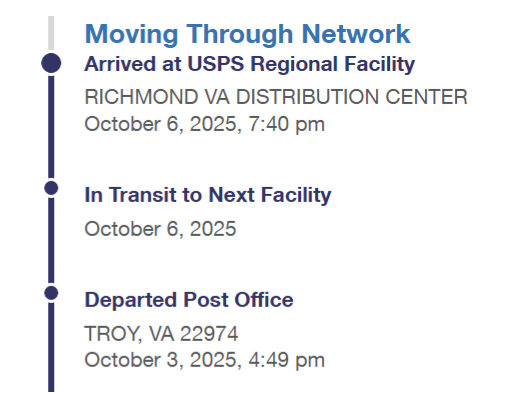
  2. En Route – Your mail is actively moving through the postal network. The final En Route scan is particularly significant—it indicates arrival at the processing and distribution center serving your recipient’s address.
  3. Arrived at Unit – The mailpiece has reached its destination post office, ready for final delivery.
  4. USPS Indicated Delivery – This is a virtual scan based on GPS tracking of delivery vehicles. While not a physical scan of your mail, it indicates that the carrier likely delivered your piece when they were at the delivery address.

Why Don’t I See a “Delivered” Scan?

Many mailers worry when tracking stops at “Arrived at Unit” or “En Route.” This is perfectly normal for First-Class Mail. Letter carriers don’t scan individual letters upon delivery—it would be impractical given the volume of mail they handle. The USPS Indicated Delivery status is only available in areas where carriers or delivery vehicles are equipped with GPS tracking capabilities.

How to Access IMb Tracing

While the USPS doesn’t offer IMb tracking data directly to consumers, and bulk mailers face strict requirements to access this service, Click2Mail makes it simple. Here’s how our streamlined process works:

  1. Submit your mailing job through our user-friendly online platform
  2. We handle the printing and mailing logistics
  3. Access your IMb scan data directly through your Click2Mail account

Need Guaranteed Proof of Delivery?

If delivery confirmation is crucial for your mailing, First-Class Mail with IMb tracking alone won’t suffice. Consider these alternatives:

  • Priority Mail or Priority Mail Express – These premium services include detailed tracking and delivery confirmation.
  • Certified Mail Service – Provides official confirmation of delivery and an optional return receipt with the recipient’s signature and delivery date.

Important Distinction

Remember that IMb tracing differs from package tracking. While package tracking provides real-time location updates, IMb tracing focuses on processing milestones within the postal network.

The Bottom Line

IMb tracing technology offers valuable visibility into your mail’s journey through the postal system. While it may not track every moment until final delivery, understanding these scan events helps set appropriate expectations and provides reassurance about your mail’s progress. With Click2Mail’s simplified access to IMb tracing, you can easily monitor your mailings and ensure they’re moving efficiently toward their destinations.

Lee Garvey

About Lee

Lee Garvey is the founder of Click2Mail, a pioneering platform in cloud-based direct mail automation since 2003. Under his leadership, Click2Mail has become a trusted USPS partner, helping thousands of businesses streamline their mailing processes and effectively bridge the gap between digital and physical marketing.

Click2mail Team2025-11-03T20:15:00-05:0001/22/2025|Uncategorized|

List Quality and Direct Mail Success: A Guide

By Lee Garvey

That expensive, beautifully designed postcard in your customer’s trash can represents more than just wasted design effort—it’s a symptom of a deeper problem that plagues many direct mail campaigns.

In the world of direct mail marketing, your mailing list is the foundation upon which everything else is built. Even the most compelling offer and eye-catching design will fail if your message lands in the wrong mailbox.

But what makes a good list, and how do you get your hands on one? In this guide, we’ll break down how to make sure your mail is getting in front of the right eyeballs.

From your desk — in minutes

Launch 500 postcards / flyers / letters in ~5 minutes. We print, address, and mail for you.

Upload your design and mailing list, pay, done.
No post office run. No subscriptions.
Next-business-day mailing for most products.

Create your free account No minimums. Use any email to get started.

Why List Quality Makes or Breaks Your Campaign

When discussing the factors that impact direct mail costs and effectiveness, Click2Mail founder and CEO Lee Garvey doesn’t mince words: “I think the biggest variable is the list.”

Carly Brown, customer support manager at Click2Mail, agrees: “You really got to spend money on a good list. If you send that mailpiece to people who don’t want your product or service, you’re just setting money on fire.”

This insight aligns with what direct marketing experts have known for decades. The success of your campaign depends on three key factors:

  • 40% – The quality of your mailing list
  • 40% – The strength of your offer
  • 20% – The creative design and copy

In other words, where your mail goes matters twice as much as all that design work and writing effort you put into it. But what exactly makes a mailing list “good,” and how can you ensure yours meets the standard?

Building a Quality Mailing List: The Fundamentals

When building your mailing list, you should adhere to four fundamental best practices.

1. Start with Clean Data

List hygiene isn’t just a best practice—it’s essential for preventing wasted resources. Signs of poor list quality include:

  • Undeliverable addresses
  • Duplicate entries
  • Outdated customer information
  • Missing apartment numbers or suite information

“If your list has more than 10% nonstandard addresses, we’ll warn you,” notes Carly. “Maybe you did something wrong, and you exported the list wrong, might have a bunch of missing apartment numbers.”

This seemingly small oversight can have major consequences for your bottom line.

“The idea of apartment numbers is really huge,” Lee says. “If you’ve got a list of apartment dwellers and don’t have numbers, you can mail out 10,000 pieces of mail that won’t get delivered, and if you send it out bulk mail at standard marketing mail rate, you won’t know because they just get thrown away.”

Tip: Run regular NCOA (National Change of Address) updates on your mailing lists at least quarterly to catch address changes and reduce undeliverable mail.

2. Understand the Different Types of Lists

Not all mailing lists are created equal. Depending on your goals, you might consider:

  • House Lists: These consist of your existing customers and prospects who have already shown interest in your business. They typically produce the highest response rates because you’ve already established a relationship with these individuals.
  • Prospect Lists: These are lists of potential customers acquired from third-party providers. While response rates tend to be lower than house lists, they’re essential for growing your customer base.
  • Response Lists: These contain individuals who have responded to similar offers or have purchased similar products, making them more likely to respond to your offer than completely cold prospects.
  • Compiled Lists: These are built from various public and private sources based on demographic characteristics. They’re typically less expensive but may yield lower response rates than response lists.

Tip: Start with small test mailings to different list types before committing to a large campaign. Track response rates carefully to determine which list provides the best ROI for your specific offer.

3. Get Granular with Targeting

The power of direct mail lies in its ability to reach highly specific audiences. As Lee points out, the specificity of your list affects both its cost and effectiveness.

“If you’re looking for a list of women in Fredericksburg, you can get it for cheap,” he says. “If you want to limit it to people who own 3-story houses with porches, that will cost you more.”

But this increased cost often translates to better results. The more precisely you can target your ideal customer, the higher your response rate is likely to be.

Modern list providers offer increasingly sophisticated targeting options:

  • Demographics: Age, gender, income, education, family status
  • Geographic: ZIP codes, neighborhoods, radius targeting
  • Psychographics: Interests, values, attitudes, lifestyles
  • Behavioral: Past purchases, channel preferences, brand loyalty

“With technology we have access to, you can get very granular,” Lee notes.

For instance:

  • An upscale furniture retailer might prioritize high-income households
  • A family daycare center might focus on addresses with children under 5
  • A senior living community would target households with residents over 65

Tip: Instead of trying to reach everyone, identify your 2-3 most profitable customer segments and create highly targeted mailings for each. A smaller, more targeted campaign often outperforms a larger, generic one.

Industry-Specific List Strategies: Examples

Different industries leverage different data points to refine their targeting. Here’s a few examples.

Real Estate

Real estate professionals often use sophisticated list targeting based on property characteristics and ownership status.

“Some will get a mailing list and know how much equity you have in the house, how many bedrooms it has, if you have a fireplace or a pool – things like that,” Carly says. “Then they’ll send you a mailer that says something like, ‘hey I’m great at selling houses with pools.”

B2B Marketing

Business-to-business marketers can also benefit from specialized list criteria.

“There’s a lot of money going into solar right now,” Carly says. “They reach out to property owners who have a large building with a big roof. You can get a list of property owners that list the square footage of their building.”

This level of targeting ensures that businesses only receive offers relevant to their specific situation, dramatically improving response rates.

Financial Services

Financial institutions often segment their lists based on life stages, wealth indicators, and specific financial behaviors.

For mortgage lenders, this might mean targeting homeowners with high interest rates who could benefit from refinancing. For investment advisors, it could involve identifying individuals approaching retirement age with certain income levels.

The key is matching financial products to the specific needs and circumstances of the recipient—something that requires highly precise list selection.

Ready to Improve Your Direct Mail Results? We Can Help You Save Time and Money

Investing in list quality isn’t just about avoiding wasted mail—it’s about dramatically improving your campaign ROI. With the right list strategy, your direct mail can reach exactly the people most likely to respond to your offer.

Click2Mail makes it easy to implement these best practices with built-in address validation, easy list management tools, and helpful support from direct mail experts. Whether you’re using your own customer list or need help acquiring a targeted prospect list, we can help you ensure your mail reaches the right mailboxes.

Start your next campaign with confidence. Visit Click2Mail.com today to access our simple list management tools and send direct mail that gets results—not recycled.

Lee Garvey

About Lee

Lee Garvey is the founder of Click2Mail, a pioneering platform in cloud-based direct mail automation since 2003. Under his leadership, Click2Mail has become a trusted USPS partner, helping thousands of businesses streamline their mailing processes and effectively bridge the gap between digital and physical marketing.

Click2mail Team2025-11-03T20:16:42-05:0001/20/2025|Direct Mail, Mailing Lists, Mailing Lists and Why They Matter, Tips & Tricks|

The Three-Touch Rule: Building an Effective Direct Mail Sequence

By Lee Garvey

That unopened marketing postcard in your mailbox might be part of a much bigger strategy than you realize.

When your favorite local restaurant sends you a birthday offer, or a real estate agent follows up after you’ve visited an open house, they’re not just sending random mail. They’re executing a carefully orchestrated direct mail sequence—one that follows what you might call the “three-touch rule.”

“The general rule for direct marketing has been for decades that you want to touch people at least three times before they’re going to do something,” explains Lee Garvey, founder and CEO of Click2Mail.

But what exactly is this rule? And more importantly, how can your business use it to transform casual browsers into loyal customers? Let’s dive in.

From your desk — in minutes

Launch 500 postcards / flyers / letters in ~5 minutes. We print, address, and mail for you.

Upload your design and mailing list, pay, done.
No post office run. No subscriptions.
Next-business-day mailing for most products.

Create your free account No minimums. Use any email to get started.

What Is the Three-Touch Rule?

The three-touch rule is a fundamental principle in direct marketing that recognizes most consumers need multiple exposures to a brand before they take action.

Research has consistently shown that a single mail piece, no matter how well-designed, rarely drives significant consumer response. Instead, a sequence of communications builds familiarity, trust, and ultimately, action.

“You send them a postcard, and they see your brand – that’s touch No. 1,” Lee says. “You send them another kind of postcard or self-mailer, and they see your brand again – that’s touch No. 2, and they go, ‘Oh, I’ve seen that before.’ And then you send them a third mailer. Now they think, ‘That’s familiar to me, I need to open this and read this.’ And that’s the piece that you want to be rich and full of content.”

This progression makes perfect sense when you think about it. Each time a potential customer encounters your brand, they move one step further in their journey from:

  • Awareness (first touch): “Oh, that’s a new pizza place in town.”
  • Recognition (second touch): “I’ve heard of them before.”
  • Consideration (third touch): “Maybe I should try their weekend special.”

Designing Your Three-Touch Sequence: The Right Format for Each Touch

The effectiveness of your three-touch campaign depends on thoughtful planning across multiple dimensions. Different mail formats serve different purposes in your sequence. Here’s a strategic approach.

First Touch: Introduction

  • Best Format: Postcards
  • Why It Works: No envelope barrier means immediate visibility for your brand and message
  • Goal: Create initial awareness

Second Touch: Reminder

  • Best Format: Note cards or another distinct format
  • Why It Works: Carly Brown, customer support manager at Click2Mail, notes that a note card-type product “does gangbusters as far as response rate goes, because they’re in a closed envelope space,” she says. “They look fancy, because the addresses are on the outside of the envelope and it’s scripted. It’s just an attractive mail piece.”
  • Goal: Build recognition and familiarity

Third Touch: Conversion

  • Best Format: Letters with complete information
  • Why It Works: “Letters are still one of the highest ROI mail pieces,” says Carly. “I think that’s because when you get an envelope, you’re thinking, ‘This is official, I must pay attention.'”
  • Goal: Provide the detailed information needed for a decision

Perfecting Your Timing

How much time should you leave between touches? There’s no one-size-fits-all answer, Lee says.

“You can experiment with the timing, but there’s whole theses that have been written about what works best,” he says. “What Click2Mail enables is the use of all different formats in any timing that you want with CRM automation.”

Some general guidelines to consider:

  • Too close together: Less than 5-7 days may feel like spam
  • Too far apart: Beyond 21-30 days and recipients might forget your previous communication
  • Sweet spot: Most experts recommend 10-14 days between touches for many businesses
  • Seasonal factors: Adjust timing based on urgency, season, or industry needs

Remember that your specific audience and offer might require adjustments to these general rules.

Beyond the Format: Creating an Effective Offer

While the three-touch sequence gets your message in front of your audience, what you actually say matters tremendously.

“When you talk to professional direct marketers, they say the offer is 40% of the efficacy, the mailing list is 40% of the efficacy, and the creative is only 20%,” Carly says.

This insight has profound implications for your campaign planning. Even the most beautiful, perfectly timed sequence will falter without the right offer and audience targeting.

Some key principles to remember when crafting your offer:

  • Free beats discounted: Carly shares an example: “We worked with a client that was a florist and they offered 50% off a bouquet of flowers if you came in and picked it up, as opposed to having it delivered. And they had two people come in. But then when gave away this $3 glass vase to put the flowers in, everybody came in.”
  • Use whole numbers: “A lot of people have found that using whole numbers instead of fractions works better,” notes Brown. “We see an awful lot of people who want to use ‘50% off’ instead of ‘half off’ – our brain thinks that we’re getting the bigger deal.”
  • Progressive value: Consider increasing the value of your offer with each touch. The first piece might simply announce your business, while the second offers a small incentive, and the third provides your strongest offer.
  • Clear call to action: Every piece should make it crystal clear what action you want the recipient to take.

By combining the right sequence of touches with compelling offers, you create a direct mail campaign that builds upon itself, creating momentum that drives customer action.

Ready to Put the Three-Touch Rule to Work? We Can Save You Time and Money

Why spend countless hours printing, stuffing envelopes, and tracking deliveries when you could be focusing on growing your business? Click2Mail makes implementing your three-touch campaign simple and affordable.

Start designing your first campaign today for just pennies per piece—no subscription fees, no minimum volume requirements, and next-day mailing for most products. Our CRM integration makes scheduling all three touches a breeze, and our tracking tools let you know exactly when your mail hits customers’ mailboxes.

Take the first step toward more effective direct mail marketing. Visit Click2Mail.com to get started.

Lee Garvey

About Lee

Lee Garvey is the founder of Click2Mail, a pioneering platform in cloud-based direct mail automation since 2003. Under his leadership, Click2Mail has become a trusted USPS partner, helping thousands of businesses streamline their mailing processes and effectively bridge the gap between digital and physical marketing.

Click2mail Team2025-11-03T20:18:23-05:0001/16/2025|Direct Mail, Tips & Tricks|

Direct Mail Formats Guide: Choosing the Right Format for Your Campaign

By Lee Garvey

You’re about to launch a direct mail campaign, and you’re staring at a list of format options longer than a coffee shop menu. From simple postcards to interactive video mailers, the choices can feel overwhelming. But here’s the truth – your format choice could be the difference between your mailer landing on a desk or in a recycling bin.

This guide will walk you through the most effective direct mail formats available today, from budget-friendly postcards to premium options that feel like leather. We’ll explore how to match formats with your campaign goals, consider your budget constraints, and learn about the design requirements that will make your campaign successful.

From your desk — in minutes

Launch 500 postcards / flyers / letters in ~5 minutes. We print, address, and mail for you.

Upload your design and mailing list, pay, done.
No post office run. No subscriptions.
Next-business-day mailing for most products.

Create your free account No minimums. Use any email to get started.

Standard Postcards: The Versatile Workhorse

Standard postcards remain the backbone of direct mail marketing, offering an ideal balance of cost-effectiveness and impact. These attention-grabbing formats come in various sizes, each serving different marketing objectives and budget considerations.

Size Options and Their Impact

  • 3.5″ x 5″ – Perfect for simple announcements and local promotions
  • 4.25″ x 6″ – The sweet spot for cost-effective marketing messages
  • 4″ x 9″ – Ideal for detailed offers while maintaining economical pricing
  • 5″ x 8″ – Provides additional real estate for compelling visuals
  • 6″ x 9″ – Commands attention for premium services
  • 6″ x 11″ – Maximum impact for high-end marketing campaigns

Choosing the Right Size

The key to selecting the right postcard size lies in understanding your message complexity and brand positioning. Smaller formats work well for straightforward offers and announcements, while larger sizes signal premium services and complex messages.

Remember that going bigger isn’t always better – it’s about matching the format to your message and target audience.

Premium Mail Formats: Making a Lasting Impression

When your campaign demands more than a standard postcard, premium mail formats offer sophisticated options that communicate value and importance to your recipients.

Notecards and Folded Cards

Premium notecards arrive in envelopes, instantly setting them apart from standard mail. These formats are particularly effective for:

  • Personal communications and thank-you messages
  • High-end product launches
  • Executive-level communications
  • Professional services marketing

The envelope creates an experience of discovery and importance that flat mail simply cannot match. Available in both standard and folded options, these formats allow for a perfect balance of professionalism and personalization.

Brochures and Booklets

For campaigns that require detailed information or multiple product offerings, brochures and booklets provide the perfect solution.

Format Options:

  • Self-mailers (8.5″ x 11″)
  • Address back page designs
  • Address front page layouts
  • Multi-page presentations

These formats excel when:

  1. Your message requires in-depth explanation
  2. You’re showcasing multiple products or services
  3. Visual storytelling is crucial to your campaign
  4. You need to include detailed specifications or pricing

Specialized Formats: Security and Specificity

Some campaigns require more than just standard marketing formats. Specialized options ensure your sensitive communications reach their destination securely and professionally.

Secure Mailers

Secure mailers combine the professionalism of traditional formats with enhanced privacy features. These 8.5″ x 11″ options are essential for:

  • Healthcare communications requiring HIPAA compliance
  • Financial statements and offers
  • Legal communications
  • Confidential business proposals

The format includes security features that prevent tampering and protect sensitive information, making them ideal for any communication that requires discretion and professionalism.

Every Door Direct Mail (EDDM): Targeting by Location

Every Door Direct Mail represents a unique approach to direct mail marketing, eliminating the need for a mailing list by targeting entire carrier routes. This format comes with specific size requirements designed to maximize impact while maintaining efficiency.

EDDM Format Options

  • 6.25″ x 11″ Mailer
  • 6.5″ x 9″ Mailer
  • 8.5″ x 11″ Mailer
  • 8.5″ x 12″ Mailer

These formats work exceptionally well for:

Reply Mail: Facilitating Response

Reply mail formats transform your direct mail from a one-way communication into an interactive dialogue. These specialized formats come in two primary varieties:

Reply Postcards (4.25″ x 6″)

  • Perfect for quick surveys
  • Event RSVPs
  • Simple information requests
  • Basic lead generation

Reply Letters (8.5″ x 11″)

  • Detailed response forms
  • Application processes
  • Complex information gathering
  • Professional correspondence

Interactive and Premium Options

The world of direct mail has evolved far beyond paper and ink. Today’s premium options create memorable experiences that command attention and drive engagement.

High-Impact Formats

  1. Video Mailers
  • Built-in screens for dynamic content
  • Perfect for high-value prospects
  • Ideal for complex product demonstrations
  1. Textured Materials
  • Specialty papers simulating various materials
  • Creates tactile engagement
  • Enhances brand perception
  1. Enhanced Interactive Elements

Format Selection Guidelines

Choosing the right format involves balancing multiple factors:

Budget Considerations

  • Standard formats (postcards under 4.5″) offer the most economical choice
  • Volume thresholds can affect pricing (optimal pricing often starts at 200-500 pieces)
  • Premium formats should align with potential return on investment

Industry Alignment

  • High-end services require premium formats
  • Retail can utilize economical options effectively
  • Healthcare communications need secure format options

Message Complexity

Take the Next Step with Your Direct Mail Campaign

Creating an effective direct mail campaign requires careful consideration of format, design, and delivery options. Click2Mail offers a comprehensive suite of direct mail solutions that align with every format discussed in this guide. From standard postcards to secure mailers, and everything in between, their platform provides the tools and expertise needed to execute your campaign effectively.

Their online system simplifies the process with:

  • Next-day mailing for most products
  • No subscription fees or minimum volume requirements
  • Professional design templates
  • Automated mailing solutions
  • API integration capabilities

Whether you’re planning a simple postcard campaign or a sophisticated multi-format direct mail strategy, Click2Mail’s platform can help you select the right format and execute your campaign with precision. Visit Click2Mail.com to explore their full range of direct mail formats and start your next campaign today.

Lee Garvey

About Lee

Lee Garvey is the founder of Click2Mail, a pioneering platform in cloud-based direct mail automation since 2003. Under his leadership, Click2Mail has become a trusted USPS partner, helping thousands of businesses streamline their mailing processes and effectively bridge the gap between digital and physical marketing.

Click2mail Team2025-11-03T20:20:17-05:0001/13/2025|Direct Mail, Tips & Tricks|

Go to Top